Basic Request Description
URLS
URLs are how you identify the things that you want to operate on. We say that each URL identifies a resource. These are exactly the same URLs which are assigned to web pages.
In fact, a web page is a type of resource. Let's take a example, and consider our sample application to retrieve a client list:
A request consists of a baseurl and a ressource:
Request: http(s)://localhost:9001/api/v1/clients
Request: http(s)://localhost:9001/api/v1/clients
|
Base url
|
http(s)://localhost:9001/api/v1
|
|
Endpoint
|
/clients
|
HTTP Verbs
Each request specifies a certain HTTP verb, or method, in the request header. This is the first all caps word in the request header. For instance,
HTTP verbs tell the server what to do with the data identified by the URL. The request can optionally contain additional information in its body,
which might be required to perform the operation.
The most familiar and important HTTP verbs are: GET and POST. But there are more HTTP verbs available. The most important ones for building RESTful API are
GET, POST, PUT and DELETE.
Topal uses only GET, POST, DELETE.
|
Methods
|
Description
|
|
GET
|
GET is used to retrieve information from a subsequent system
|
|
POST
|
POST is used to update information in a subsequent system
|
|
DELETE
|
DELETE is used to delete information in a subsequent system
|
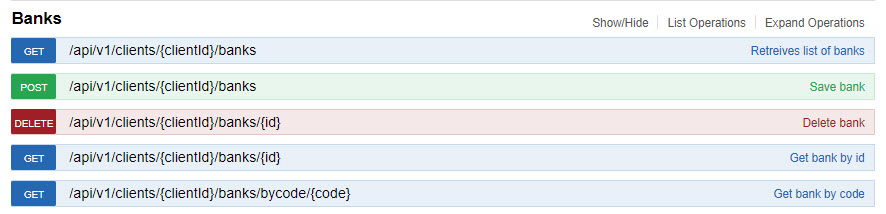
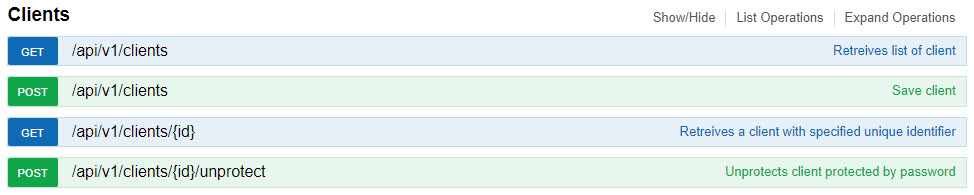
Topal Example of Request Types